
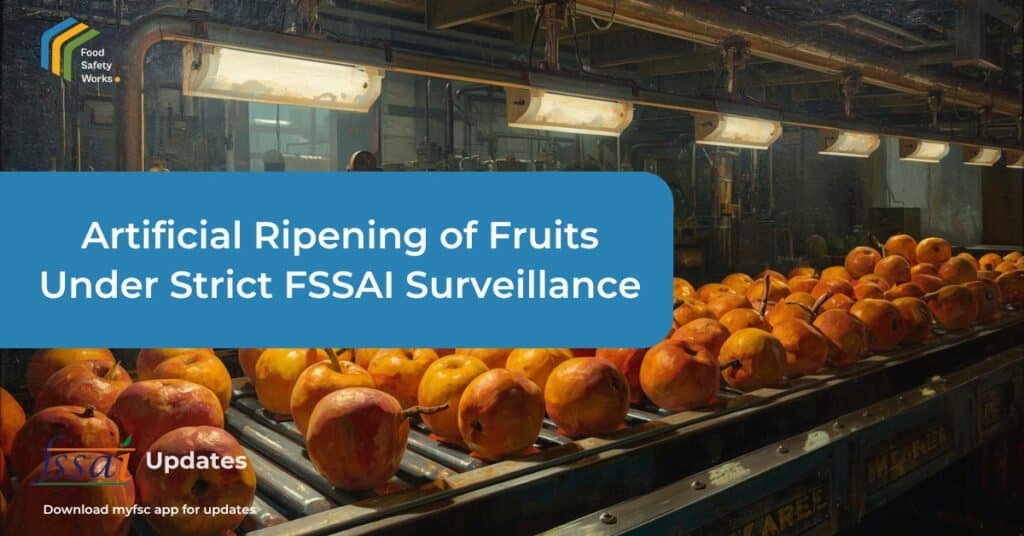
The Food Safety and Standards Authority of India has issued a directive to strengthen control over artificial ripening of fruits. The authority aims to stop unsafe practices across the supply chain.
FSSAI clearly prohibits the use of calcium carbide, also known as “masala.” This ban comes under the Food Safety and Standards (Prohibition and Restrictions on Sales) Regulations, 2011. This substance can cause serious health risks. Therefore, businesses must not use it for ripening fruits such as mangoes, bananas, and papayas.
In addition, FSSAI has flagged the misuse of ethephon. Some businesses dip fruits directly in its solution. However, this method is not allowed. Instead, FSSAI permits only controlled ripening using ethylene gas. Direct contact with ethylene in liquid or powder form remains prohibited.
Further, authorities will increase inspections at mandis, storage units, and distribution points. They may also conduct special drives during peak seasons. As a result, enforcement teams can detect violations more effectively using strip paper tests.
Compliance requirements for food businesses
- Use only approved ethylene gas based ripening methods
- Avoid calcium carbide and any non permitted agents
- Do not dip or directly apply ethephon on fruits
Non compliance can trigger strict action under the Food Safety and Standards Act, 2006. Authorities may initiate penalties or prosecution based on findings.
In conclusion, FSSAI expects businesses to follow safe and approved ripening practices. Companies should review their processes and ensure full compliance.
Want to stay ahead of FSSAI advisories and food safety regulations? Download the myFssai App for real-time alerts, enforcement updates, and expert compliance guidance all in one place by Food Safety Works.‘