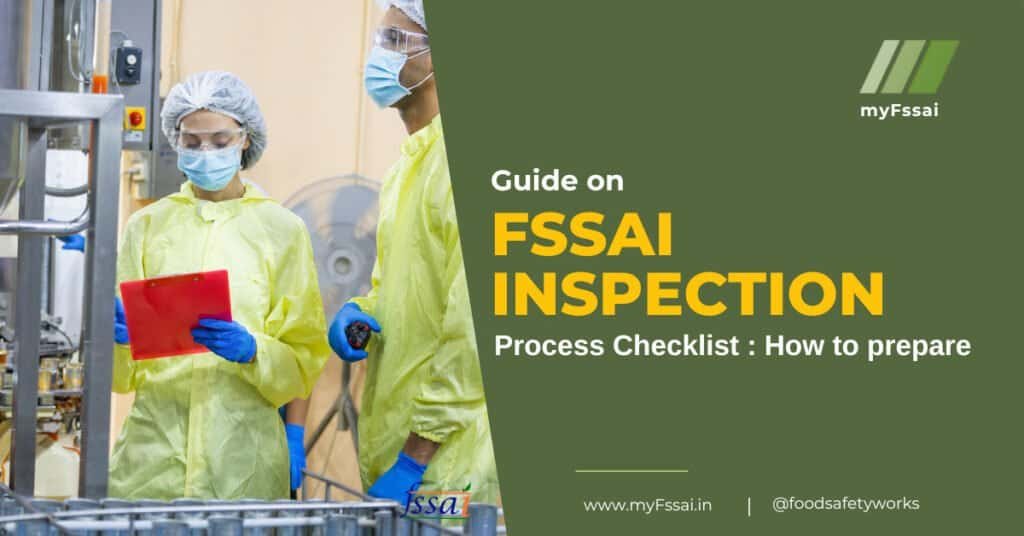
FSSAI Inspection is a critical part of regulatory compliance for every food business in India. Whether you run a manufacturing unit, cafe, cloud kitchen, or food warehouse, inspections conducted by the Food Safety and Standards Authority of India ensure that your operations meet safety, hygiene, and documentation standards.
Many businesses treat inspections as a last-minute event. That approach often leads to stress, missing documents, and non-compliance risks. In reality, inspection readiness should be built into daily operations.
This guide explains what happens during an FSSAI Inspection, what officers check, and how you can stay audit-ready at all times.
How the FSSAI Inspection Process Works
An FSSAI Inspection can be scheduled or surprise-based, depending on the type of business and regulatory requirements.
Step-by-step inspection flow:
- Arrival of Food Safety Officer (FSO)
The officer visits your facility with authorization credentials. This could be during license approval, renewal, or routine surveillance. - Verification of FSSAI License
The officer checks whether your FSSAI license is valid, displayed, and aligned with your business activity. - Facility Walkthrough
A physical inspection of the premises is conducted. This includes kitchen areas, storage units, processing zones, and waste disposal areas. - Document Review
The officer requests key FSSAI compliance documents for verification. - Sampling (if required)
Food samples may be collected for laboratory testing. - Inspection Report
Observations are recorded, and a report is shared with compliance status or corrective actions.
Inspections may take anywhere between 1 to 4 hours, depending on the size and complexity of the facility.
Key Things FSSAI Officers Observe During Inspection
During an FSSAI Inspection, officers focus on practical compliance rather than just paperwork.
1. Hygiene and Sanitation
- Cleanliness of floors, walls, and equipment
- Absence of pests or contamination
- Proper waste disposal systems
2. Food Storage Practices
- Segregation of raw and cooked food
- Proper labeling and expiry tracking
- FIFO (First In First Out) implementation
3. Staff Hygiene
- Use of gloves, caps, and uniforms
- Personal cleanliness of food handlers
- Availability of handwashing facilities
4. Infrastructure and Equipment
- Condition of storage units and refrigeration
- Maintenance of machinery
- Adequate ventilation and lighting
5. License Display and Compliance Awareness
- Display of valid FSSAI license
- Awareness of food safety practices among staff
Even small gaps, such as improper labeling or missing hygiene records, can lead to observations in the inspection report.
What Compliance Requirements Officers Will Check
An inspection is not limited to visual checks. Officers also evaluate whether your business meets regulatory compliance requirements.
Key compliance areas include:
- Valid FSSAI license and correct category
- Timely license renewal
- Food safety management system implementation
- Product testing and quality checks
- Employee training and certification
For businesses operating multiple units, Managing multiple FSSAI license compliance becomes crucial. Each facility must independently meet all requirements.
Failure to comply may result in:
- Improvement notices
- Monetary penalties
- Suspension of license
- Temporary closure in severe cases
Essential Compliance Records You Must Maintain
Maintaining proper documentation is one of the most important aspects of passing an FSSAI Inspection.
Mandatory FSSAI compliance documents include:
- FSSAI license copy
- Food safety management plan
- Water testing reports
- Pest control records
- Cleaning and sanitation logs
- Employee medical certificates
- Food safety training records
Additional records may include:
- Temperature logs for storage
- Supplier invoices and traceability records
- Product testing reports
These documents must be:
- Updated regularly
- Easily accessible
- Organized facility-wise
Businesses managing multiple outlets often struggle with documentation because records are scattered across emails, files, and spreadsheets.
How to Stay Audit-Ready Using myFssai
Preparing for an inspection manually can be time-consuming. This is where digital platforms like myFssai simplify compliance.
With myFssai, businesses can:
- Store all FSSAI compliance documents in one place
- Track license renewal deadlines automatically
- Maintain audit-ready records for each facility
- Monitor compliance status across multiple locations
- Get alerts for missing documents or upcoming inspections
Instead of searching through files during an inspection, businesses can instantly access required records.
For companies handling multiple outlets or kitchens, this ensures consistent compliance across all locations.
Conclusion
An FSSAI Inspection is not just a regulatory requirement. It is a reflection of how well your food business operates in terms of safety, hygiene, and compliance.
Businesses that prepare only when inspections are announced often face challenges. On the other hand, companies that maintain continuous compliance find inspections smooth and stress-free.
The key is simple:
- Keep documentation updated
- Maintain hygiene standards daily
- Track license renewals
- Use digital tools for compliance management
With structured systems and expert support, inspection readiness becomes part of everyday operations rather than a last-minute effort.