
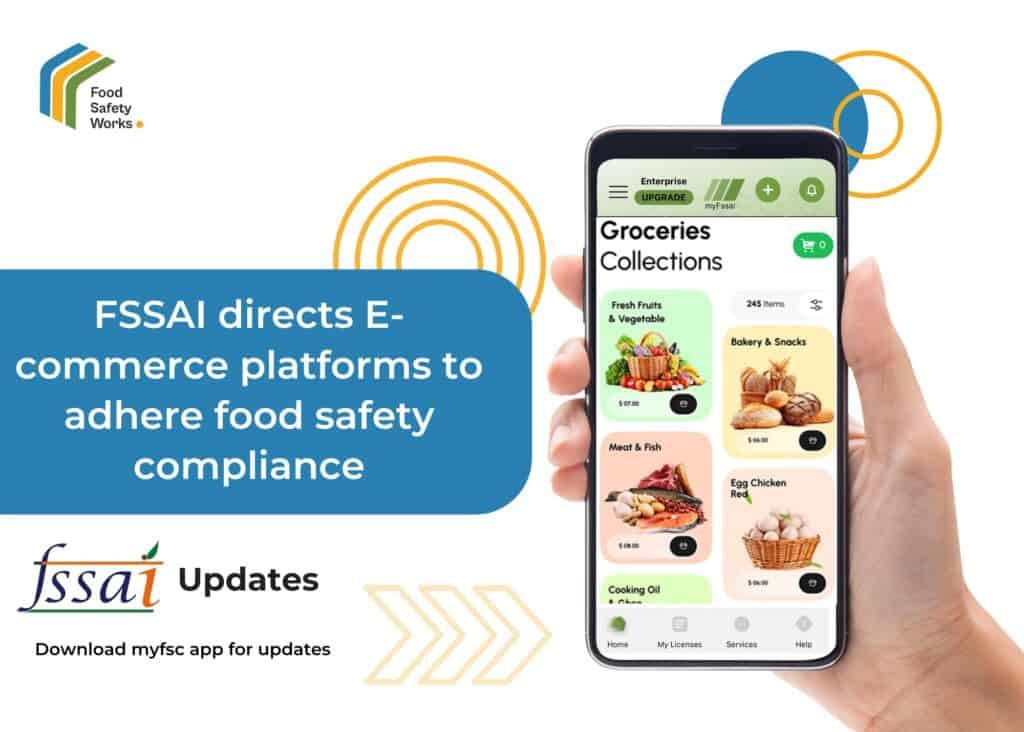
FSSAI E-commerce norms have been introduced in a major regulatory move by the Food Safety and Standards Authority of India (FSSAI) to reinforce food hygiene, ensure supply chain transparency, and improve regulatory accountability across online food delivery platformsThese new directives, issued during a high-level meeting on July 8, 2025, in New Delhi, signify a pivotal step toward regulating India’s fast-growing e-commerce food sector.
Over 70 stakeholders from leading food aggregators and e-commerce companies attended the meeting, where the FSSAI CEO outlined critical action points. The move reflects the authority’s intensified focus on ensuring that food safety standards in digital commerce match those required in traditional food retail.
What Are the New FSSAI E-commerce norms?
The FSSAI directives center around greater visibility, training, hygiene, and compliance reporting for all e-commerce food manufacturers and platforms. Here are the key requirements:
1. Mandatory Display of FSSAI License/Registration
All e-commerce food platforms must now clearly display their FSSAI license or registration number on transaction documents provided to consumers, such as invoices, memos, and digital receipts. This is expected to enhance traceability and consumer confidence.
2. Visibility of the Food Safety Connect App
FSSAI mandates that information about the Food Safety Connect App be made accessible to users. This mobile application enables consumers to lodge complaints and access verified food safety data, making the process more transparent and user-centric.
3. Warehouse and Storage Compliance
Platforms must upload updated details of their storage and warehousing facilities to the FoSCoS portal. These include photographs and structural information, ensuring that all backend operations meet hygiene and regulatory standards. FSSAI is also exploring the possibility of mandating expiry date disclosures for packaged food at the point of sale.
4. FoSTaC Training for Food Handlers
All personnel handling food in the e-commerce supply chain must complete FoSTaC (Food Safety Training and Certification). Platforms are required to maintain documentation of these sessions and submit them to FSSAI as part of regular audits.
Why Are These Norms Critical for E-commerce Food Manufacturers?
As India’s food industry increasingly moves online, so do the risks related to unregulated storage, inconsistent hygiene, and non-transparent delivery systems. FSSAI e-commerce norms are designed to bring uniformity and accountability across the supply chain, especially for e-commerce food manufacturers and sellers.
The new rules directly address gaps that could compromise consumer health:
- Ensuring that even digital sellers are held to the same standards as traditional food businesses
- Bringing transparency to food origin, storage, and handling
- Creating clear responsibilities for all entities in the food value chain
By aligning operational practices with food safety regulations, these platforms also improve their market credibility and reduce regulatory risks.
What Should E-commerce Platforms Do Next?
E-commerce food platforms must immediately begin implementing the following steps to remain compliant:
- Register all warehouses with FSSAI and upload photographs and structural details to the FoSCoS portal
- Display FSSAI license numbers on every receipt, bill, or memo shared with customers
- Train all food handlers under the FoSTaC certification program and document completion
- Promote the Food Safety Connect App as part of the customer experience
- Prepare for inspections by maintaining proper hygiene logs, inspection reports, and training records
These steps not only fulfill regulatory obligations but also enhance consumer trust and operational reliability.
A Shift Toward Safer Digital Food Commerce
With this directive, FSSAI has made it clear that the online food economy cannot remain outside the purview of strict food safety compliance. E-commerce platforms now shoulder a larger share of responsibility in ensuring the food they deliver is safe, traceable, and regulated.
By enforcing hygiene protocols, data transparency, and licensing requirements, FSSAI is bridging the regulatory gap between digital and traditional food ecosystems. For consumers, this means safer food. For businesses, it sets a higher bar that could define leadership in the sector.
Stay Ahead with the myFSSAI App
Want real-time alerts on FSSAI directives, inspection schedules, or compliance updates?
Download the myFSSAI App and manage your food business compliance from registration to renewal on the go